Configuring a connection pool is something that developers often get wrong. There are several, possibly counter-intuitive for some, principles that need to be understood when configuring the pool.
Your style is unique compared to other people I have read stuff from. Many thanks for posting when you have the opportunity, Guess I will just bookmark this web site.
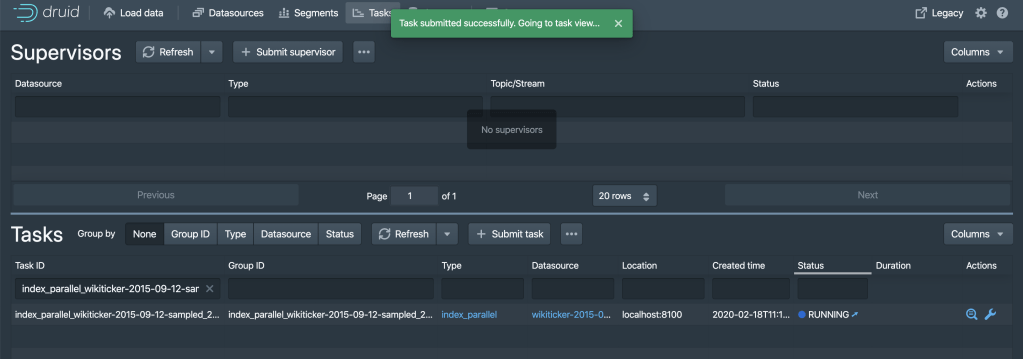
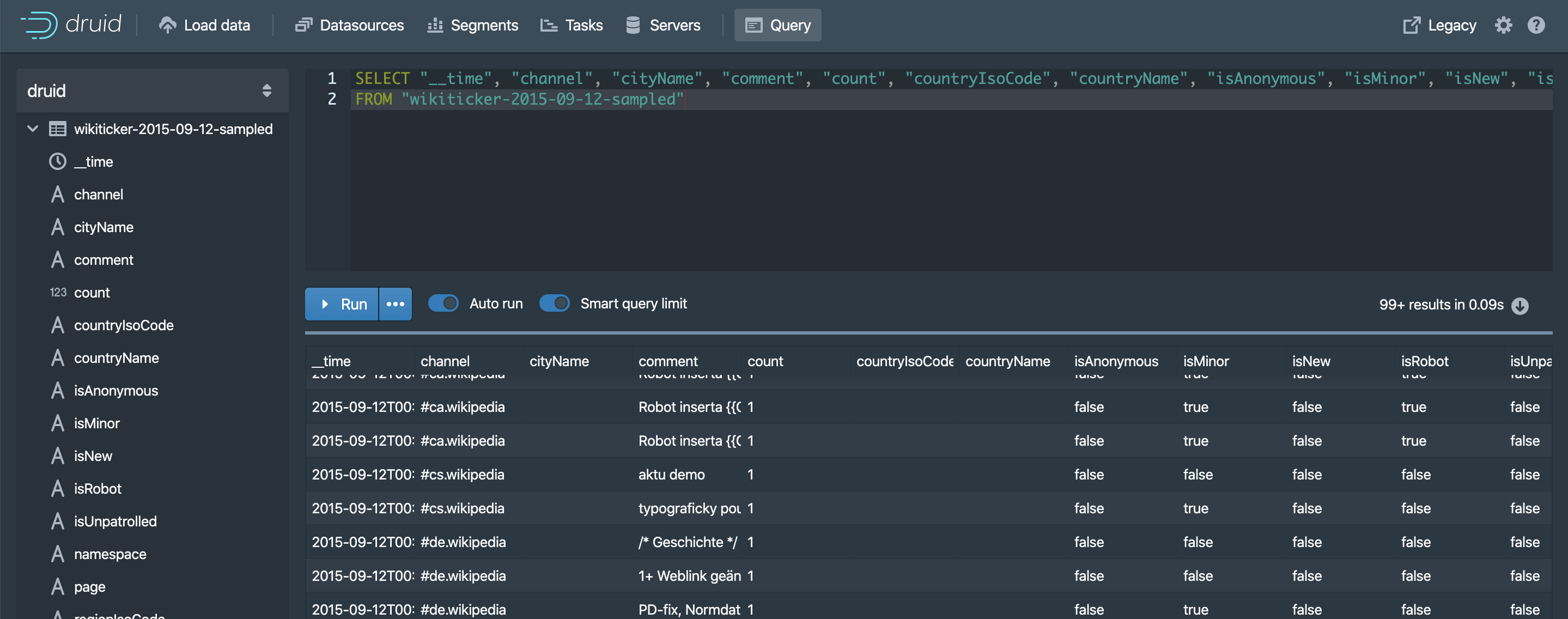
As we have some business requirements about data aggregation and online processing, so we did a quick PoC on Apache Druid. Next I will show how to build druid quickly and start your ingestion task.
1.Select release version which is compatible to your existing system and download the package.
2.Choose what kind of druid service you want to start with
For single node, just execute the script under bin directory which is start with start-single-server-, or you can execute start-micro-quickstart
For multiple node cluster, please update the configuration files under start-micro-quickstart in one node and sync to other nodes. If you want to connect to your hadoop cluster, please copy corresponding hadoop xml files and kerberos keytab under druid.
Then you start druid service in every node by execute start-cluster script.
BCP/DR: Business Continuous Plan/Disaster Recovery
Why is business continuity planning important?
Every organisation is at risk from potential disasters that include:
Natural disasters such as tornadoes, floods, blizzards, earthquakes and fire
Accidents
Sabotage
Power and energy disruptions
Communications, transportation, safety and service sector failure
Environmental disasters such as pollution and hazardous materials spills
Cyber attacks and hacker activity.
A Business Continuity Plan includes:
Plans, measures and arrangements to ensure the continuous delivery of critical services and products, which permits the organization to recover its facility, data and assets.
Identification of necessary resources to support business continuity, including personnel, information, equipment, financial allocations, legal counsel, infrastructure protection and accommodations.
Creating a business continuity plan
A BCP typically includes five sections:
BCP Governance
Business Impact Analysis (BIA)
Plans, measures, and arrangements for business continuity
Readiness procedures
Quality assurance techniques (exercises, maintenance and auditing)
Establish control
Senior managers or a BCP Committee would normally:
approve the governance structure;
clarify their roles, and those of participants in the program;
oversee the creation of a list of appropriate committees, working groups and teams to develop and execute the plan;
provide strategic direction and communicate essential messages;
approve the results of the BIA;
review the critical services and products that have been identified;
approve the continuity plans and arrangement;
monitor quality assurance activities; and
resolve conflicting interests and priorities.
This BCP committee is normally comprised of the following members:
Executive sponsor has overall responsibility for the BCP committee; elicits senior management’s support and direction; and ensures that adequate funding is available for the BCP program.
BCP Coordinator secures senior management’s support; estimates funding requirements; develops BCP policy; coordinates and oversees the BIA process; ensures effective participant input; coordinates and oversees the development of plans and arrangements for business continuity; establishes working groups and teams and defines their responsibilities; coordinates appropriate training; and provides for regular review, testing and audit of the BCP.
Security Officer works with the coordinator to ensure that all aspects of the BCP meet the security requirements of the organization.
Chief Information Officer (CIO) cooperates closely with the BCP coordinator and IT specialists to plan for effective and harmonized continuity.
Business unit representatives provide input, and assist in performing and analyzing the results of the business impact analysis.
Business impact analysis
Identify the mandate and critical aspects of an organization
Prioritize critical services or products
Identify impacts of disruptions
Identify areas of potential revenue loss
Identify additional expenses
Identify intangible losses
Insurance requirements
Ranking
Identify dependencies
Plans for business continuity
Mitigating threats and risks
Analyze current recovery capabilities
Create continuity plans
Response preparation
Alternate facilities
Readiness procedures
Training
Exercises
Goal
Objectives
Scope
Artificial aspects and assumptions
Participant Instructions
Exercise Narrative
Communications for Participants
Testing and Post-Exercise Evaluation
Quality assurance techniques
Internal review
On a scheduled basis (annually or bi-annually)
when changes to the threat environment occur;
when substantive changes to the organization take place; and
after an exercise to incorporate findings.
External audit
Procedures used to determine critical services and processes
Methodology, accuracy, and comprehensiveness of continuity plans
What to do when a disruption occurs
Disruptions are handled in three steps:
Response
Incident management
notifying management, employees, and other stakeholders
assuming control of the situation
identifying the range and scope of damage
implementing plans
identifying infrastructure outages; and
coordinating support from internal and external sources
Communications management
Operations management
Continuation of critical services
Recovery and restoration
Recovery and restoration
Re-deploying personnel
Deciding whether to repair the facility, relocate to an alternate site or build a new facility
Acquiring the additional resources necessary for restoring business operations
Re-establishing normal operations
Resuming operations at pre-disruption levels
Conclusion
When critical services and products cannot be delivered, consequences can be severe.
All organizations are at risk and face potential disaster if unprepared.
A Business Continuity Plan is a tool that allows institutions to not only to moderate risk, but also continuously deliver products and services despite disruption.
Items
plans must be updated and tested frequently;
all types of threats must be considered;
dependencies and interdependencies should be carefully analyzed;
key personnel may be unavailable;
telecommunications are essential;
alternate sites for IT backup should not be situated close to the primary site;
employee support (counselling) is important;
copies of plans should be stored at a secure off-site location;
sizable security perimeters may surround the scene of incidents involving national security or law enforcement, and can impede personnel from returning to buildings;
despite shortcomings, Business Continuity Plans in place pre September 11 were indispensable to the continuity effort; and
increased uncertainty (following a high impact disruption such as terrorism) may lengthen time until operations are normalized.





 Anonymous is discussing.








 Wang's Tech Blog
Reply